
Attendance / Presenoldeb
At Cwmfelin Primary, we want the very best for all of our pupils, and ensuring strong attendance is a vital part of helping every child thrive. Encouraging good attendance is a key priority in our School Improvement Plan, and we place great emphasis on the importance of being in school every day. By working together with families, we aim to support pupils in developing positive habits that will benefit their learning, wellbeing, and future success.
Good Attendance
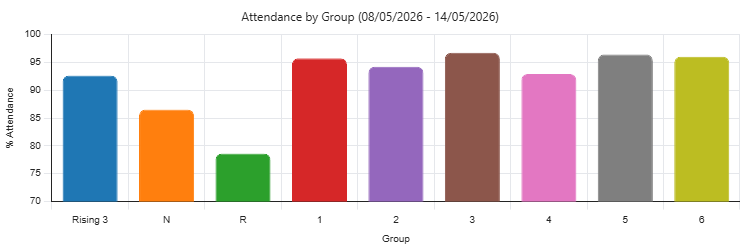
Good attendance at Cwmfelin Primary School is considered to be above 95%, and we expect all children to meet at least this minimum level to ensure they make the best possible progress. Our school is open for 190 days each year, which leaves 175 days for holidays, rest, and non‑urgent appointments. We kindly ask families to arrange routine medical and dental appointments outside of school hours whenever possible, helping us to maximise every child’s learning time.
Why does good attendance matter?
Regular attendance is vital to every child’s success in school. Research shows that pupils who attend consistently are more likely to keep up with their classwork, achieve their targets, and make strong academic progress. Good attendance also supports the development of important personal and social skills, helping children build confidence and positive relationships. In addition, being in school every day fosters lifelong habits such as punctuality, responsibility, and effective time management—skills that are essential both now and in the future.
Should my child come to school? See the guidance below which contains information regarding common infections, exclusion periods and advice.
Guidance for childcare, preschool and educational settings - Public Health Wales
Punctuality
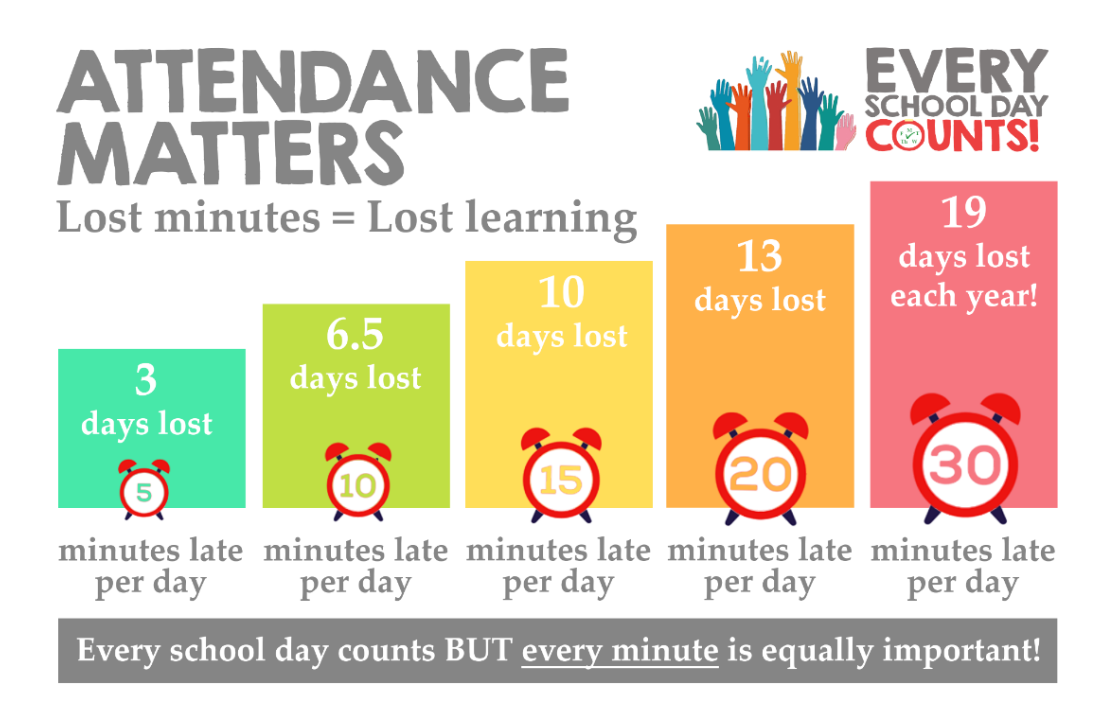
Being punctual is an important part of school life at Cwmfelin Primary, as it helps children make the most of every learning opportunity and start the day feeling calm and prepared. Arriving on time supports a smooth routine, builds good habits for the future, and ensures pupils don’t miss key parts of their lessons.
Punctuality matters because:
- Children settle into the school day calmly and confidently.
- They don’t miss essential learning or instructions at the start of lessons.
- It helps develop strong lifelong habits such as responsibility and good time management.
What can I do to support my child's attendance?
Parents and carers are legally responsible for ensuring their child receives a full‑time education, and attending school every day plays a vital role in securing the best outcomes for every pupil. Absence not only disrupts a child’s learning, but can also affect the whole class.
Children who do not attend regularly are more likely to:
- Achieve lower results in assessments
- Struggle to maintain friendships
- Miss out on wider opportunities in education and future employment
- Become involved in risky or antisocial behaviour
Even small amounts of absence have a big impact.
90% attendance equals half a day missed every week, which adds up to 4 weeks of lost learning each year, and half a year over five years of primary school.
Working Together to Support Good Attendance
We ask parents to keep children at home only when they are genuinely too unwell to attend, and to arrange holidays, medical or dental appointments outside the school day whenever possible. If emergency appointments cannot be avoided, children should attend school before or after the appointment and provide an appointment card as evidence.
Parents must inform the school of any absence. Absence can only be authorised when a satisfactory explanation is provided. If attendance becomes a concern, we may request medical evidence to authorise further illness‑related absences.
Examples of reasons that cannot be authorised include:
- Birthdays
- Shopping, including for school uniform
- Haircuts
- Sibling school closures
- Minor illness affecting another family member
- Head lice (children can attend once treated)
- Holidays taken without permission
- Attending sporting weekends / leaving early to travel.
If you need to request leave for exceptional circumstances, forms are available from the school office or can be downloaded from the forms section of our website.
We take a consistent approach because we want the very best for every child—and good attendance is essential to helping them succeed.
Fixed Penalty Notices – A Quick Guide for Parents
In Wales, if a child has persistent unauthorised absences, parents may receive a Fixed Penalty Notice (FPN). This is part of the Welsh Government’s system for improving school attendance and is set out in the Education (Penalty Notices) (Wales) Regulations 2013.
An FPN is a fine of:
- £60 if paid within 28 days
- £120 if paid between 28–42 days
If the fine is not paid, the local authority may begin prosecution for failing to ensure regular attendance.
Notices may be considered appropriate for:
- Repeated unauthorised absences, including unauthorised holidays during term time (10 sessions / 5 school days during the current term)
- Persistent late arrival at school, i.e. after the register has closed, in the current tem. 'Persistent' means at least 10 sessions of late arrival.
- Truancy
Miss School, Miss Out! / Colli Ysgol, Colli Mas